Plinky Plonky Drop and Roll Mechanics Explained
How the two core actions in Plinky Plonky work: dropping free balls toward the jackpot slot and rolling for better balls, plus how luck from better balls leads to more jackpots.
How Drop and Roll Work in Plinky Plonky
The drop and roll mechanics form the core loop the creator sums up as "DROP. ROLL. REBIRTH." You drop balls down boards toward a JACKPOT slot in the middle, and you roll for better balls, because better balls mean more luck and more luck means more jackpots. The official description on the Roblox game page frames the whole experience around that cycle, with forging, boards, upgrades, gadgets and rebirth layered on top.
Dropping: free, and nothing is lost
According to the creator's own description, each drop is completely free. Players cannot spend money for drops, and they never lose anything from dropping balls. The creator also states plainly that the game is not gambling.
That matters for how you read the loop: dropping is the repeatable action you take to chase the jackpot slot, not a wager. The game is listed on Roblox as a Simulation / Incremental Simulator and is free to play.
The jackpot slot is the target
Dropping balls and hitting the JACKPOT slot is the main goal of a run. According to GameRant's codes guide, a clean hit on the middle slot unlocks the next collection and keeps your run going, while a miss ends it.
The official description describes the same structure through FINAL CHANCE: reach it and hit the jackpot to unlock the next collection; miss, and your run is over. The official badge list includes First Jackpot and a separate SUPER JACKPOT badge, described in its own text as rare no matter how high your luck is.
Rolling: better balls, more luck
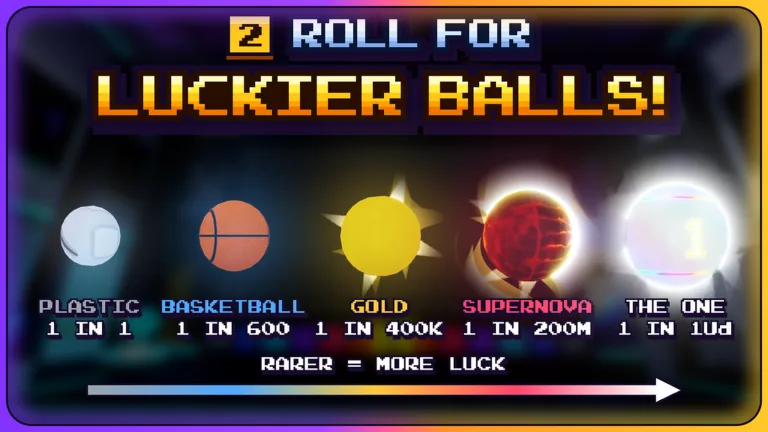
Rolling is how you improve the balls you drop. The creator's description states the chain directly: roll for better balls, better balls equal more luck, and more luck means more jackpots.
GameRant similarly describes extra roll luck as helping you find stronger balls faster, and notes that special balls can push a run further. Rolling therefore is not cosmetic — it feeds the drop phase by changing what you have to drop.
Where drops and rolls lead
The drop-and-roll cycle connects to the rest of the progression:
- Forging: balls are combined into rarer balls, per the official description.
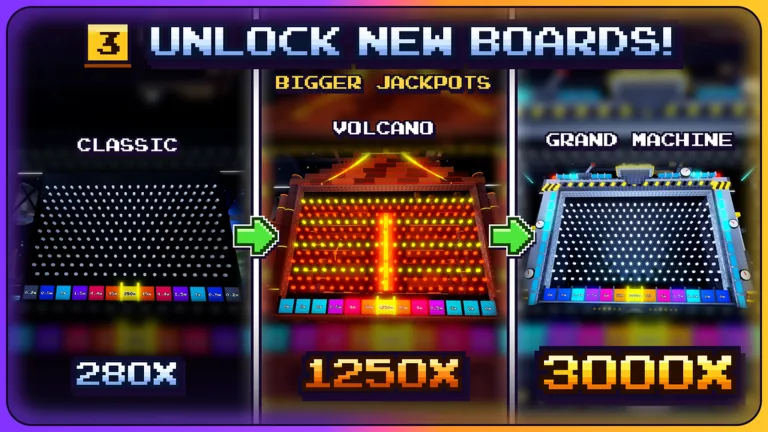
- Boards, upgrades and gadgets: bought as you progress, also per the official description.
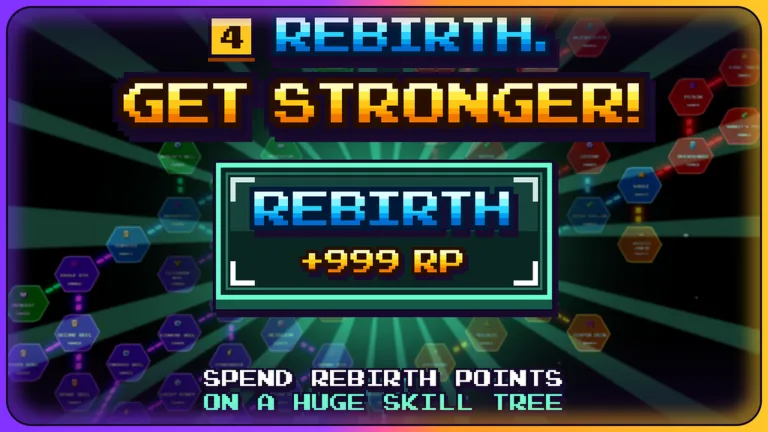
- Rebirth: every run earns Rebirth Points for a skill tree that makes the next run stronger.
- Offline coins: the creator states you earn coins offline.
Codes sit alongside this. The official description lists FEEDBACKUPDATE for 2x Roll Luck (5 min). According to Roblox Den's code list, NINJAMAN requires a rebirth before use, and codes are entered through the gear icon at the top right, into the ENTER CODE box, then redeemed. Roblox Den also states you must first join the Plinky Community group to use codes.
A common misunderstanding
The creator's description ends with an explicit note to Roblox moderation: this game is not gambling, and "This game is NOT plinko." The name and the ball-dropping may invite the comparison, but the creator rejects it, and the free-drop, no-loss design is the stated reason.
The loop in short
Every run is the same shape: drop balls at the jackpot slot, roll for balls with better luck so those drops land more jackpots, forge and buy upgrades as you go, then rebirth to carry points into a stronger next run. Third-party trackers describe it the same way — UrGameTips calls it an incremental game about dropping balls down boards and aiming for the jackpot slot, with rolling, forging and successive collections — but for mechanics, the creator's own description remains the primary source. Details such as exact luck values, drop rates or board layouts are not officially documented in the material available here.
Related guides
Related Guides
Plinky Plonky Codes: Active Codes and How to Redeem
Every Plinky Plonky code the official Roblox game page has published, what each one gives, and where new codes are announced.
Plinky Plonky Global Leaderboards: What Can You Compete In?
Identify the three confirmed global leaderboard categories so players know which achievements the game tracks competitively.
Does Plinky Plonky Earn Coins While You Are Offline?
Explain the confirmed offline coin feature and distinguish it from details that are not supplied, such as earning rates, caps and collection steps.
Plinky Plonky Badges List and How to Unlock Them
Every official Plinky Plonky badge, from First Jackpot and First Rebirth to SUPER JACKPOT and the very hard P REBIRTH RANK, explained.