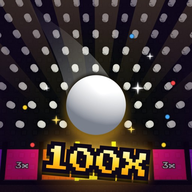
Plinky Plonky beginner guide: Balls, Jackpots, Collections, and Rebirth
Learn Plinky Plonky's core loop, from ball drops and forging to Final Chance, collections, Rebirth Points, and the announced RELEASE code.
Understand the Loop Before Chasing Your First Jackpot
Your first big goal in Plinky Plonky is the jackpot slot in the middle of the board. Understanding how balls, collections, and rebirth connect helps you make sense of progression—and why a failed run still contributes to future attempts. This Plinky Plonky beginner guide explains the confirmed systems and gives you a practical way to approach your first sessions.
Plinky Plonky is a Roblox incremental game built around dropping balls through boards. You roll for better balls, combine balls through forging, purchase boards and upgrades, and eventually reach a progression gate called Final Chance. Rebirth Points feed into a skill tree that strengthens later runs.
The official Plinky Plonky game description confirms these mechanics. It does not provide exact odds, upgrade prices, forging recipes, or an optimal purchase order, so the advice below focuses on understanding your choices.
| System | Confirmed role | What to check as a beginner |
|---|---|---|
| Ball drops | Send balls down boards toward the central jackpot slot | Watch how drops resolve on your current board |
| Rolling | Obtain better balls associated with greater luck | Compare the information shown for available balls |
| Forging | Combine balls into rarer balls | Read the requirements before committing |
| Boards, upgrades, and gadgets | Purchasable progression options | Compare their displayed costs and effects |
| Final Chance | A jackpot unlocks the next collection; a miss ends the run | Recognize when you have reached this progression gate |
| Rebirth | Provides Rebirth Points for a skill tree | Read available node descriptions before spending points |
Treat this as a map of the game's systems, rather than a fixed sequence of purchases.
Learn Ball Drops, Rolling, and Forging
The basic objective is to drop balls down a board and reach its central jackpot slot. The developer states that drops are free and do not consume something you have wagered. That makes ordinary drops a useful opportunity to observe the board and understand the jackpot objective.
Start by watching where balls finish. The supplied description does not establish a reliable aiming technique, a timing trick, or a guaranteed route to the middle, so avoid assuming that one successful drop proves a repeatable method.
What better balls do
According to the developer, better balls provide more luck and improve jackpot opportunities. Rolling is one way to obtain them.
That relationship makes ball progression worth understanding early. However, no numerical luck values or jackpot probabilities are supplied. A better ball should not be treated as a promise that your next drop will hit the jackpot.
When comparing balls in the game, read any displayed stats and descriptions. Those details are more useful for a specific decision than an unsupported rarity ranking.
How forging fits into progression
Forging combines balls to create rarer balls. It gives you another route toward improving your collection alongside rolling.
Before you forge, check which balls the interface requires and what result it displays. The available evidence does not establish ingredient counts, success rates, or whether particular combinations are better value than rolling.
A sensible beginner habit is to understand a forge's stated requirements before confirming it. There is no verified universal rule here to forge every available ball immediately.
Compare Purchases and Understand Final Chance
Plinky Plonky lets you buy new boards, upgrades, and gadgets. These are confirmed purchase categories, but the official description does not explain every item's effect or cost.
For early decisions, compare the options currently visible to you:
- Read what each purchase says it changes.
- Compare its price with your available resources.
- Favor an effect you understand when the alternatives are unclear.
- Recheck your options as you progress instead of assuming one purchase order works everywhere.
These are decision-making tips, not a tested optimal build. There is not enough evidence to recommend always buying a board before a gadget, or rolling before every upgrade.
Why Final Chance matters
Final Chance is the clearest progression gate described by the developer. Hit its jackpot and you unlock the next collection. Miss and your run ends.
This is an important distinction when learning the game: the description specifically attaches a run-ending outcome to Final Chance. It does not say every ordinary missed jackpot ends your run.
As you approach this stage, review the ball and upgrade information available in your game. Better balls are associated with better luck, but the source provides no guaranteed Final Chance setup or success threshold.
Update 2 added Collection 6. The announcement establishes that addition without supplying a complete list of collection contents or individual unlock requirements.
Use Rebirth to Prepare for Later Runs
Rebirth connects individual runs to longer-term progression. The official description says every run earns Rebirth Points, which support a skill tree designed to make the next run stronger.
That means unlocking the next collection is not the only measure of progress. A run can contribute to your future strength through Rebirth Points even when it does not take you as far as you hoped.
For your first skill-tree decisions, read the available node descriptions and costs. Choose based on effects you can identify and your current goals. Update 2 added more rebirth tree nodes, but the supplied evidence does not identify their names, values, or prerequisites.
There is also no verified formula for Rebirth Point earnings or a confirmed best moment to rebirth. Avoid planning around an exact reset threshold unless the game itself gives you the information needed to support it.
Check the RELEASE Code and Other Announced Features
The official description announces RELEASE as a code for 500 coins. It is a useful early reward to check, although its current validity and the redemption interface have not been independently verified.
If you find a code redemption option in the game, enter the code as announced and check the result before including those coins in your spending plans.
Several other features are confirmed in the supplied description:
- Offline earnings: Announced as an added feature, with no documented earning rate or storage cap.
- Index and player profiles: Listed among the additions in Update 2.
- Halloween event: Announced, without confirmed rewards or an end date.
- Global leaderboards: Track Most Coins, Rebirths, and Rarest Ball.
For a beginner, the core progression systems offer the clearest starting point. Learn how rolling and forging improve your balls, understand the Final Chance outcome, and read the rebirth tree before trying to optimize leaderboard progress.
When returning after time away, check what the game displays for offline earnings. The announcement alone does not establish how long rewards accumulate or how they are calculated.
FAQ
What should I focus on first in this Plinky Plonky beginner guide?
Begin with ordinary ball drops and learn the central jackpot objective. Then examine rolling, forging, and available purchases so you understand how they support progression. Read the displayed effects and requirements before committing resources.
How do you unlock the next collection?
The official description says you must hit the jackpot at Final Chance to unlock the next collection. Missing at Final Chance ends the run. Exact odds and collection-specific requirements are not supplied.
What do Rebirth Points do?
Rebirth Points support a skill tree that makes later runs stronger. The developer says every run earns these points, but the available description does not provide the earning formula or an optimal skill-tree path.
Does the RELEASE code still give 500 coins?
The developer announces RELEASE with a 500-coin reward. Current redemption success has not been verified, so treat it as an announced code to check in the game rather than a guaranteed active reward.